
The Unsung Heroes Part 2
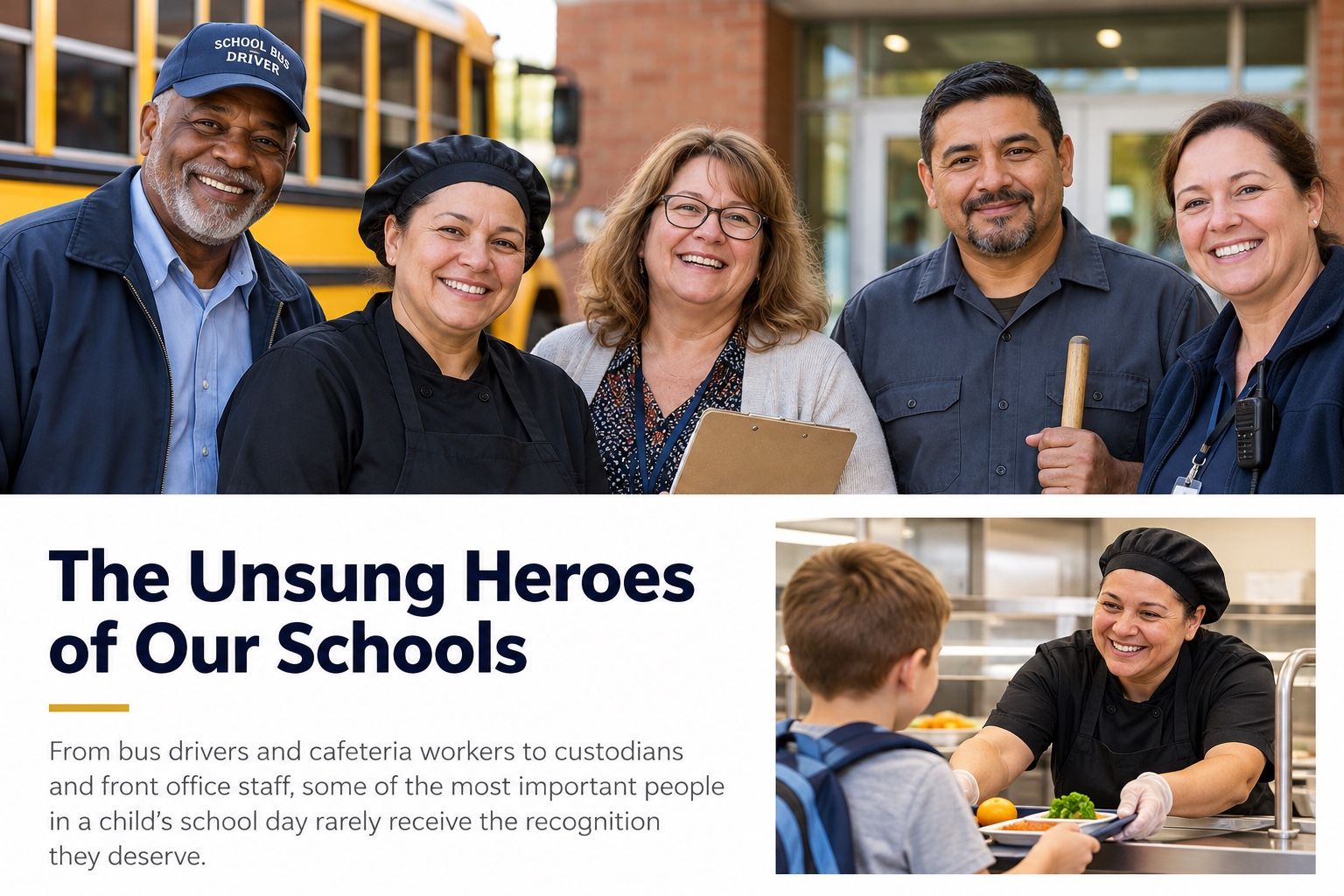
The people who make a difference in children's lives, often without recognition.
Read Part 1: The Unsung Heroes: The Role of Paraprofessionals in Special Education
Think back to your own school days. You probably remember a favorite teacher or two. Perhaps there was a principal who made an impression on you or a coach who encouraged you when you needed it most.
But what about the bus driver who greeted you every morning? The cafeteria worker who remembered your name? The custodian who always had a kind word, or the school secretary who helped you when you were sick, frightened, or having a difficult day?
We spend a great deal of time recognizing teachers and administrators, and deservedly so. But there is another group of school employees whose contributions rarely make headlines, even though our schools could not function without them.
They are the unsung heroes of our schools.
The First and Last Faces of the School Day
For thousands of children, the school day doesn't begin when they enter the classroom. It begins when they climb aboard a school bus.
Bus drivers carry an enormous responsibility. They must safely transport dozens of children while managing everything from traffic and weather to disagreements between students. Yet many also find time to offer a smile, a friendly greeting, or a few encouraging words.
For a child who is anxious about school, that simple interaction can matter.
And at the end of a difficult day, the same driver may be the last school employee that child sees. A familiar, friendly face can make the ride home a little easier.
More Than a Meal
School cafeteria workers do much more than prepare and serve food. They help ensure that children have access to meals that support their health, attention, and ability to learn.
But their contributions aren't limited to nutrition.
Consider the child who doesn't have many friends and eats lunch alone. Or the student who comes through the lunch line looking unusually quiet or upset. A cafeteria worker who notices, remembers a name, or offers a little kindness may provide one of the few positive interactions that child experiences that day.
These moments aren't part of a formal lesson plan. They don't appear on a report card.
But they still matter.
The People Who Keep Schools Running
Custodians are another group whose work is often noticed only when something goes wrong.
They arrive early, stay late, clean up messes, maintain buildings, and help create environments where children can learn safely. Much of their work takes place before students arrive or after everyone else has gone home.
Yet many custodians also become familiar, trusted adults in their schools.
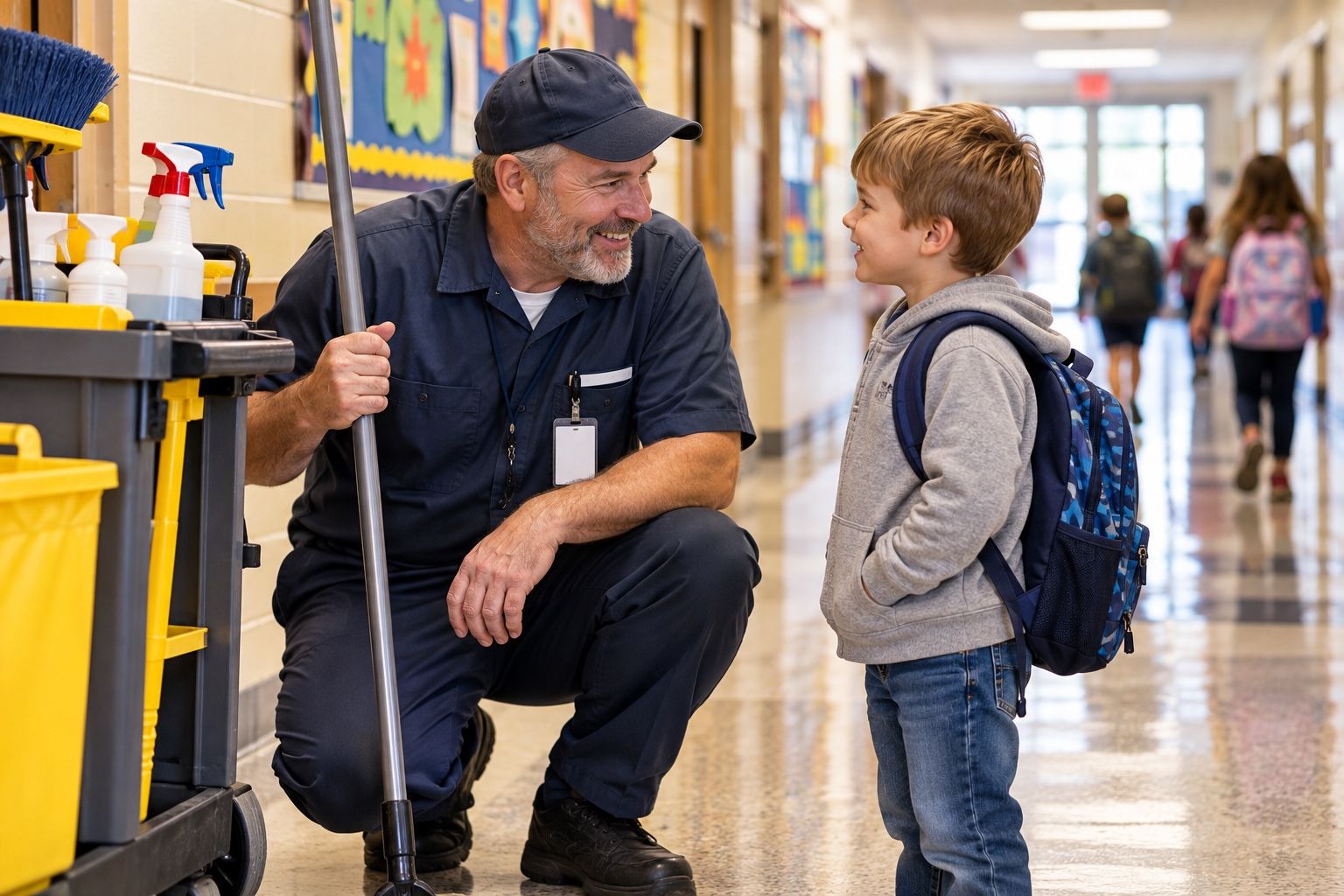
A student might stop to talk with a custodian in the hallway or receive a friendly wave while walking to class. These everyday interactions can help children feel that they belong.
Then there are the front office employees and school secretaries who seem to know everyone and everything.
They answer phones, greet visitors, help worried parents, comfort sick children, manage unexpected problems, and somehow keep the school day moving.
For a frightened kindergartner waiting to be picked up, a reassuring voice from the school secretary may mean more than we realize.
Sometimes the Smallest Moments Make the Biggest Difference
During my years working in schools, I've come to appreciate that children don't always form their most meaningful connections with the adults we might expect.
A child struggling academically may feel especially comfortable talking with a custodian. A student who has difficulty getting along with classmates may look forward to seeing a particular cafeteria worker. Another child may feel safer simply knowing that someone in the front office remembers their name.
These relationships don't replace the important work of teachers, counselors, or school psychologists. They complement it.
Children need to feel safe, accepted, and connected to their schools. Sometimes that sense of belonging develops through ordinary interactions with adults who may never realize the impact they're having.
Not every important lesson is taught in a classroom, and not every person who makes a difference has a teaching certificate.
Recognition Shouldn't Be an Afterthought
There is another side to this conversation that deserves attention.
Many school support employees work demanding jobs for relatively modest wages. Some have limited opportunities for advancement, and their contributions may receive little public recognition.
We celebrate academic achievement, athletic accomplishments, and outstanding teachers. Those celebrations are important. But how often do we recognize the people who prepare hundreds of meals, transport children safely, clean classrooms, or patiently help families navigate a busy school office?
Perhaps not often enough.
Recognizing these employees doesn't require an elaborate ceremony or a special appreciation week. Sometimes it begins with acknowledging the value of their work and treating them with the same respect we extend to other education professionals.
A Simple Thank You
The next time you visit your child's school, consider thanking someone whose name isn't on a classroom door.
Thank the bus driver who gets your child to school safely. Thank the cafeteria worker who serves hundreds of meals. Thank the custodian who keeps the building clean and welcoming. Thank the secretary who answers your questions and helps when something goes wrong.
And perhaps encourage your children to do the same.
Schools are communities, and every person who works in them contributes to the experience children have each day.
Some of those contributions are easy to measure. Others happen quietly, one smile, one conversation, or one small act of kindness at a time.
The people responsible for those moments may never know how much they mattered to a child. But that doesn't make their contributions any less important.
© 2026 Student Evaluation Center, LLC